← Back to All Guides
A free guide by Lauren Dallas Instagram

6 Meta Ads Rules I'd Follow In 2026

If you're still running Meta ads the way you did two years ago, you could be making them more expensive than they need to be. The platform is becoming more AI-driven, more automated and much better at deciding who should see your ad, where they should see it and which creative they should see - Meta says it has continued increasing the computing power behind its ad-ranking AI, so the system keeps getting more sophisticated at matching ads to the people most likely to respond to them. Which means the job of the advertiser is changing too. In 2026, you don't win by building the most complicated campaign. You win by giving Meta the right goal, enough data, enough creative, and then getting out of its way.

Here are six rules I'd follow if I were running Meta ads right now (which I am).

None of these require you to learn a new dashboard or memorise another setting - they're mindset shifts more than technical ones.
Rule 1

Optimise For The Result You Actually Want

One of the easiest mistakes is choosing the cheapest-looking objective rather than the objective closest to your business goal. A cheap click isn't necessarily a cheap customer - you could have an ad generating hundreds of website visits and still wonder why nobody is buying. Before launching a campaign, ask: what is the actual result I want Meta to find more of? Not "how do I get the cheapest traffic," but "how do I get more of the action that makes my business money?"
The 2026 rule
optimise as close to the money as your data allows. 100 cheap leads that never buy aren't necessarily better than 20 expensive leads who do.
Rule 2

Stop Overcomplicating Your Campaign

There was a time when Ads Manager looked like one campaign, five ad sets, seven audiences, twenty interests, three lookalikes and four retargeting windows - a spreadsheet just to remember what was happening. In 2026, simpler campaign structures can give Meta more data to learn from instead of unnecessarily fragmenting your budget. For many businesses that looks more like one campaign, one primary ad set, and multiple ads and creative variations. There are legitimate reasons to separate audiences, countries, offers or objectives - the point is, don't create another ad set unless you can explain exactly why it needs to exist.
The 2026 rule
consolidate before you complicate. Give Meta enough budget and conversion data in one place to actually learn what works.
Rule 3

Let Meta Search Broader Than You Think

Advertisers used to spend hours building the "perfect" interest stack - and eventually create such a tiny box that Meta has very little room to find anyone else. Meta can use an enormous number of behavioural and contextual signals to decide who is likely to respond to an ad, which is why broader audience approaches and Advantage+ Audience have become such an important part of modern Meta advertising. Instead of telling Meta everything you think you know about your buyer, give it strong inputs - your offer, your conversion data, your existing customers, your creative, your messaging - then give the system room to learn.
Key insight
Your creative can do a huge amount of your targeting for you. An ad saying "Still manually creating every Instagram post for your coaching business?" already tells Meta - and the viewer - exactly who the message is for.
Rule 4

Don't Switch Off Placements Just Because You Don't Like Them

"Why is my ad showing there?" So the advertiser switches off Reels, Stories, Audience Network, Facebook Feed - and slowly reduces Meta's options. But your personal browsing habits are not necessarily your customer's browsing habits. Meta currently recommends Advantage+ placements because it allows its delivery system to distribute ads across available placements and find opportunities to achieve the campaign objective. Even Audience Network shouldn't automatically be written off - Meta rolled out changes to its full-screen formats across 2025 and early 2026 and says advertisers may see increased engagement, though it recommends looking at performance holistically.
Bonus
Meta reports that Reels campaigns using vertical 9:16 video with audio and key information in the safe zone have shown stronger delivery and lower costs. Don't take a landscape Facebook ad and hope it magically becomes a great Reel - create assets that belong there.
Rule 5

Don't Ask AI To Write Your Ads Until You Give It Your Customer

Most people prompt "write me a Facebook ad for my course" - and get something that sounds like every Facebook ad for every course ever created. AI isn't the problem, the input is. Before asking AI to write your ads, give it the material that contains the language of your real customer: sales call transcripts, customer reviews, DM conversations, webinar Q&As, testimonials, FAQs and objections. Then ask it to find what your customer complains about repeatedly, what they've already tried, what they're afraid of, and what words they use to describe the problem. Now you're not asking AI to invent marketing - you're asking it to find patterns inside your own customer data.
The 2026 rule
AI + generic prompt = generic marketing. AI + customer intelligence = marketing that sounds like your customer.
Rule 6

Stop Looking For "The One Winning Ad"

You're not trying to make one masterpiece - you're trying to create an ecosystem of creative that gives Meta different ways to sell the same offer. One person stops for a founder talking to camera, another needs a testimonial, another notices a bold static image. Your campaign could include talking-head videos, UGC-style videos, testimonials, static graphics, carousels, demonstrations, founder stories, problem-aware ads and before/after stories - then vary the message too, across time-saving, money-making, pain-avoidance, proof and simplicity angles. That's becoming even more relevant as Meta continues investing heavily in AI-powered ad selection - in January 2026, Meta said it had doubled the GPUs used to train its latest ads-ranking model during Q4 2025.
The 2026 rule
don't find one winner. Build a library of winners.

Before you launch your next campaign, check these:

  • Am I optimising for the result I actually want?
  • Have I unnecessarily split my budget between too many ad sets?
  • Am I giving Meta enough room to find buyers?
  • Have I left Advantage+ placements on unless my data gives me a reason not to?
  • Do I have vertical creative made for Reels and Stories?
  • Have I used real customer language in my ads?
  • Am I testing multiple creative formats and multiple messages — not just colours and headlines?
Real Talk

Stop trying to outsmart the algorithm.

Your competitive advantage isn't knowing 97 secret buttons inside Ads Manager. It's having a great offer, clear messaging, strong customer data, lots of great creative, accurate tracking and a simple campaign structure - then allowing Meta's system to do more of the matching and distribution. The advertisers who understand that shift are going to have a very different experience from the ones still endlessly tweaking interests, placements and tiny audiences.

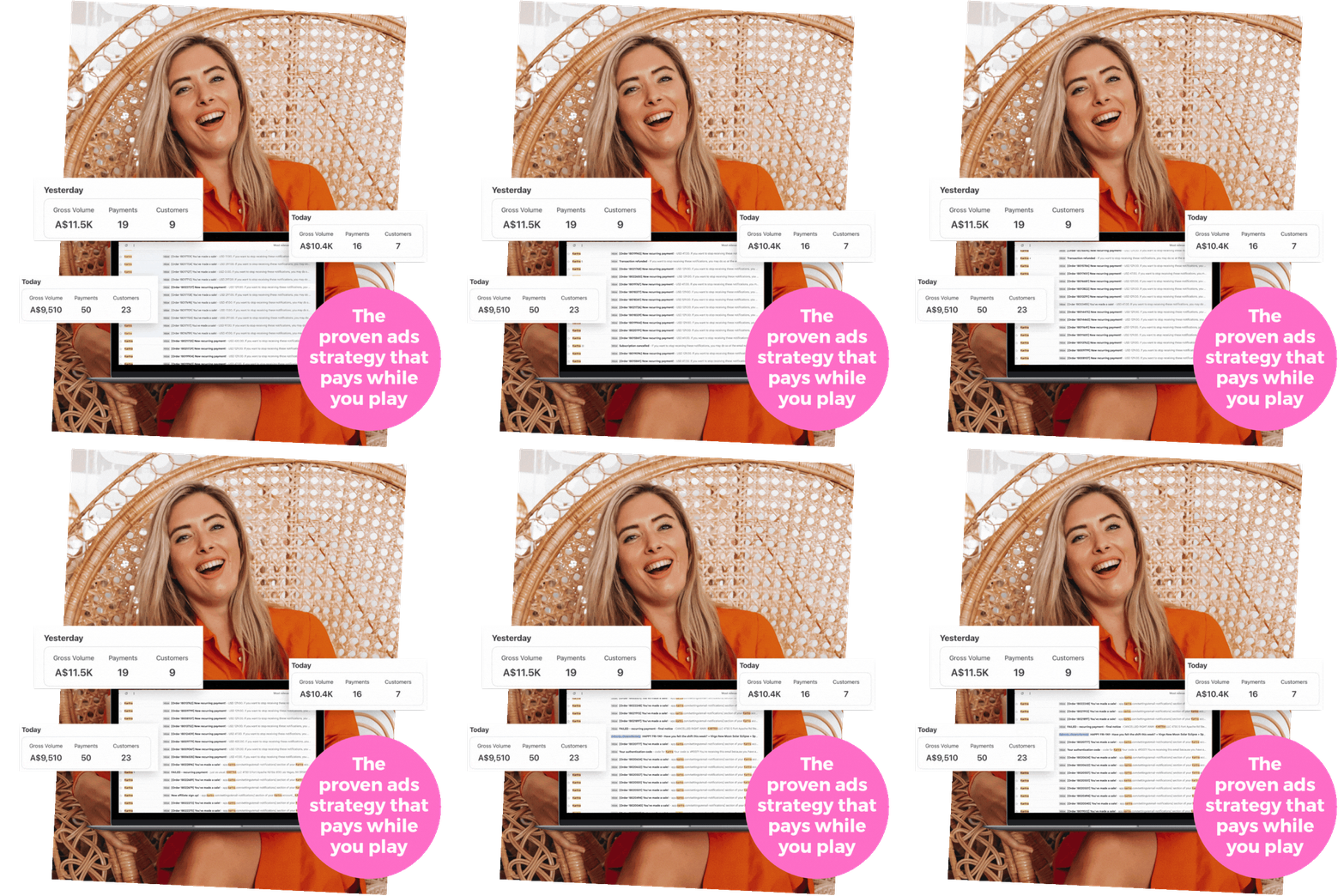
I share more on how I use Meta Ads to turn $1 into $3-$5 repeatedly in my free masterclass. You can watch it below.👇
Free Training

Meta Ads Money Machine: How To Turn $1 Into $3–5 (On Repeat) With Meta Ads

Stop waiting to "grow a following," and start growing sales. Discover my exact system for generating 1,000+ high-quality leads every month and 30+ daily sales from social media - even if you have zero followers.

In this session you'll learn:
✔ Why growing organically feels harder than ever, and the fix — the truth about what's really happening on social media, and why ads are the non-negotiable lever for consistency, sales, and scale
✔ The 3 profit plays that work on repeat — the proven strategies fueling 1,000+ leads a month in my own business, without thousands of followers or endless content
Webinar preview
Real Results ★
Student resultsStudent resultsStudent results
© 2026 Lauren Dallas Creator Hub · Free Content